I work with movement, contact, contemporary dance, and material, and I am interested in raw emotion and play. I use play to connect, experiment and expand our perspectives. My practice is driven by questions of queer belonging and a need to build ecosystems that hold multiplicity and difference. I also work with technology and explore how it shapes identity and perception.
I have collaborated on immersive installations with numerous artists, Jazmin Morris on TRex Dreams of Mangoes and Figs, exploring technological access, waiting in digital spaces, and consciousness; and Zach Blas on installations such as Cultus (Arebyte, Secession), Profundior (Berlin Biennale), and The Doors (Edith-Russ-Haus für Medienkunst, De Young Museum, Van Abbemuseum). These works examine consciousness expansion, human/machine relations, and AI religiosity, interrogating the extractive data practices underlying AI's rapidly advancing emotional intelligence.
I am co-founder of Disruptive Nostalgia, a collective which sets out to reimagine and challenge the narratives of architecture, landscape, and cultural memory informed by intersectional politics. The collective is currently resident at Spreepark in Berlin where they explore how memory, color, and play shape our understanding of place and connection to each other and nature.
art residencies
Halaqat (2026), Beirut, Lebanon
Rupert Alternative Education Program (2025), Vilnius, Lithuania
When T-Rex Dreams of Mangoes and Figs with Jazmin Morris (2024) — commissioned by Mediale, and exhibited with Videocity UK at Tyneside Cinema (Newcastle), with Forum Sudutpandang at Kongsi 8 (Jakarta) and Marlah! Hub (Palu), at Modal Gallery (SODA, Manchester), Mozilla Festival 2025 (Barcelona), Peckham Digital (London), Imagined Worlds at Lewisham Library (London), and Adventures in Consciousness (University of Oxford)
Infrastructures of AI (2025) — accepted for presentation at the Connective (t)Issues Workshop, with Data & Society and The Politics of AI: Governance, Resistance, Alternatives with Sustainable AI Futures (Goldsmith University)
CULTUS with Zach Blas (2023) — commissioned by Arebyte Gallery, London, UK, and Secession, Vienna, Austria
Profundior with Zach Blas (2023) — commissioned by Berlin Biennale for Contemporary Art, exhibited at Hamburger Bahnhof
576 Tears with Zach Blas (2022) — commissioned by UP Projects for “This is Public Space” series
The Doors with Zach Blas (2020) — commissioned by Edith-Russ-Haus für Medienkunst, Oldenburg, de Young Museum, San Fransisco, and Van Abbemuseum, Eidhoven
Scattered Minds — short film / coded animation exploring multiplicity of the mind
How Do I Dance? / Where Do I Go? (2025) — new media art installation with animated archeological relics, part of the Onland Loop Art Critique 17th Public Activation
Ecological Dialogues — ongoing research, workshop and collective choreography on movement, play and technology
publications
Lee, Angela Ka Ki, and Chris Tegho. “Spatial Choreography of Grounded Computation.” un Magazine, no. 20.1, Stones & Circuits: Art, AI, and the More-Than-Human Commons, 2026.
D’Cruz, A.∗, Tegho, C.∗, Greaves, S.∗, & Kermode L. (2022). Detecting Tear Gas Canisters With Limited Training Data. IEEE/CVF
Winter Conference on Applications of Computer Vision (WACV). ∗equal contribution
Tegho, C., Budzianowski, P., & Gašić, M. (2018). Benchmarking Uncertainty Estimates With Deep Reinforcement Learning for Dialogue
Policy Optimisation. IEEE International Conference on Acoustics, Speech, and Signal Processing (ICASSP).
Tegho, C., Budzianowski, P., & Gašić, M. (2017). Uncertainty Estimates for Efficient Neural Network-based Dialogue Policy Optimisation. Accepted at the Bayesian Deep Learning Workshop, 31st Conference on Neural Information Processing Systems (NeurIPS).
Chris Tegho —
Moving Differently
Rupert Alternative Education Programme Final Event 2025, Vilnius
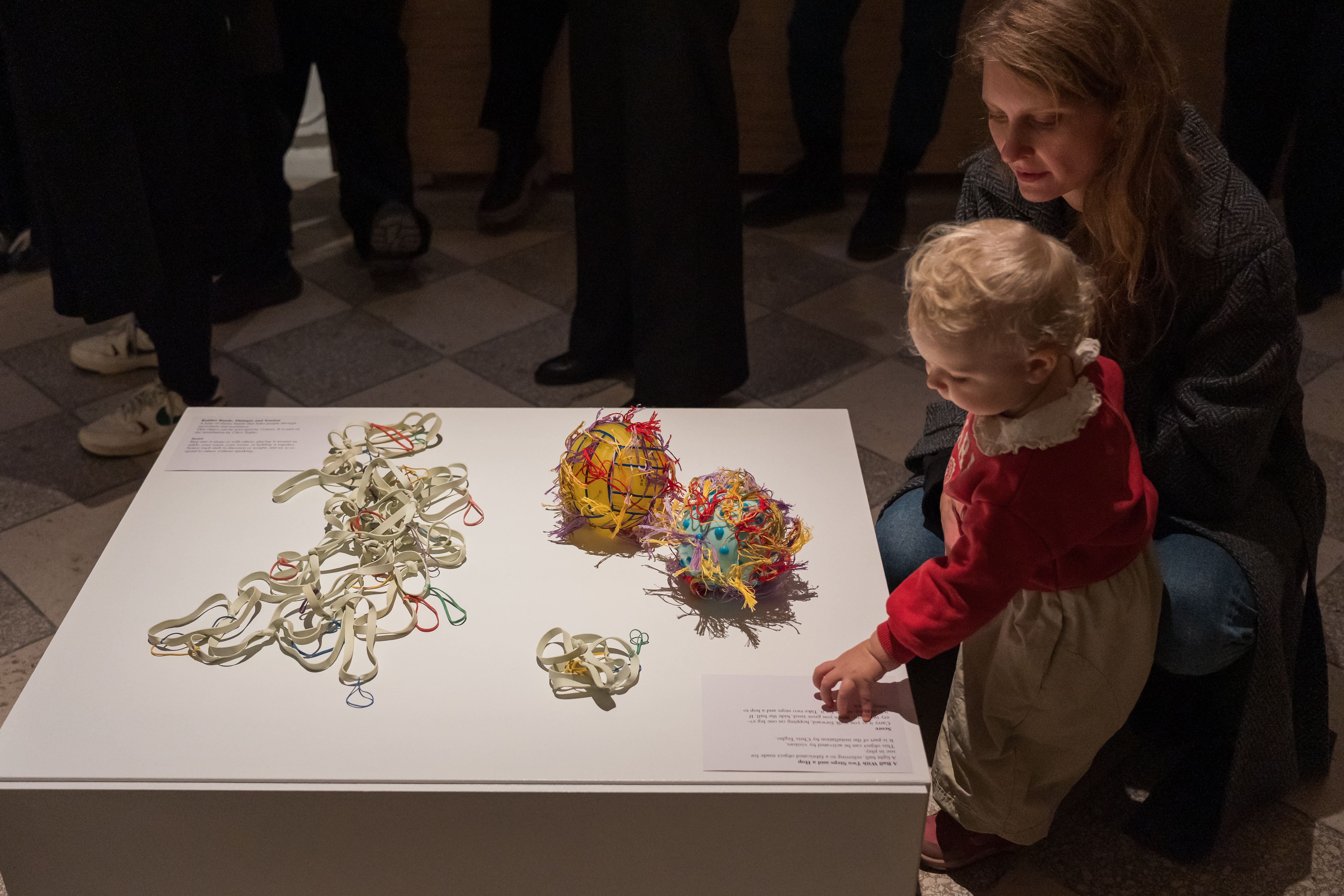
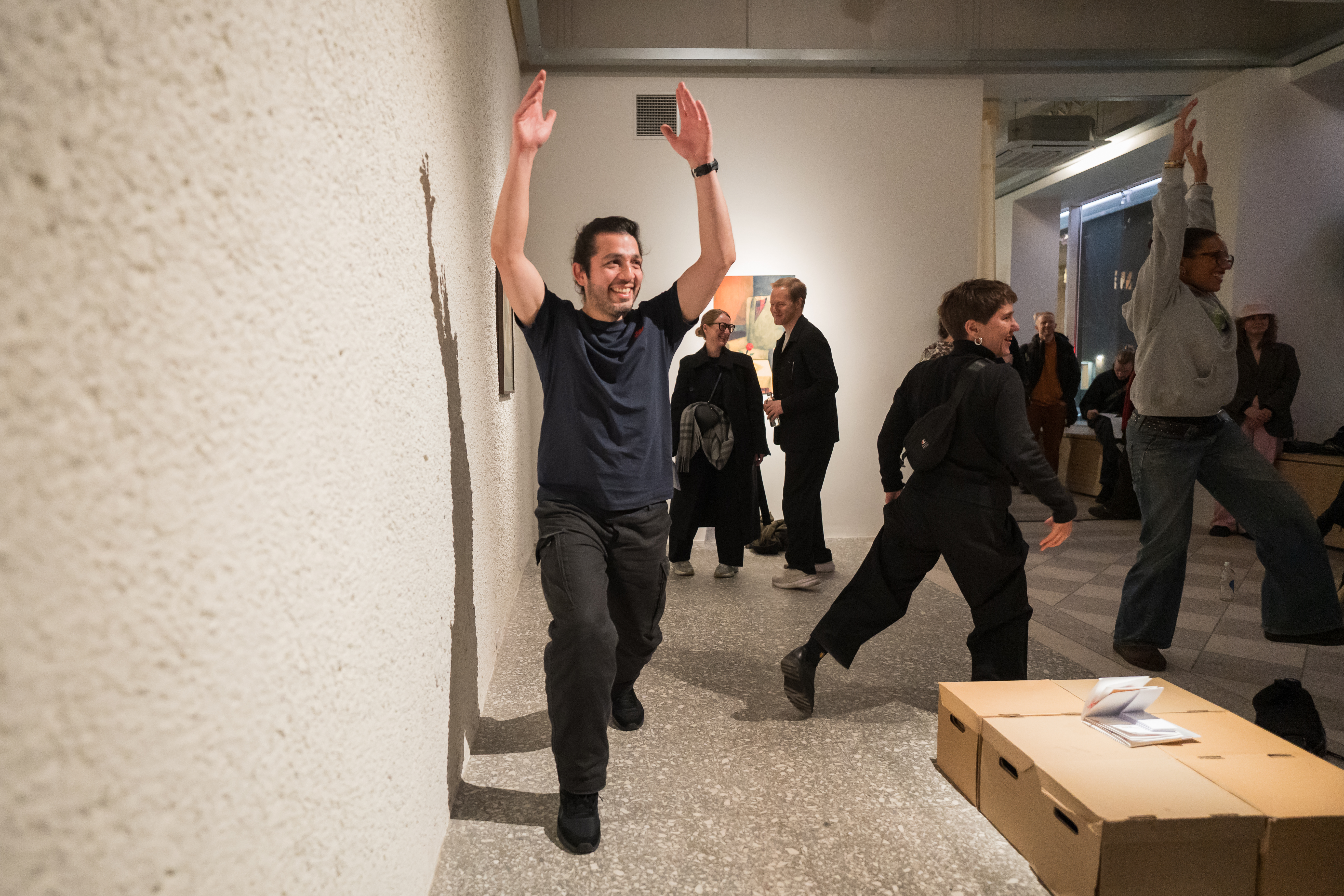
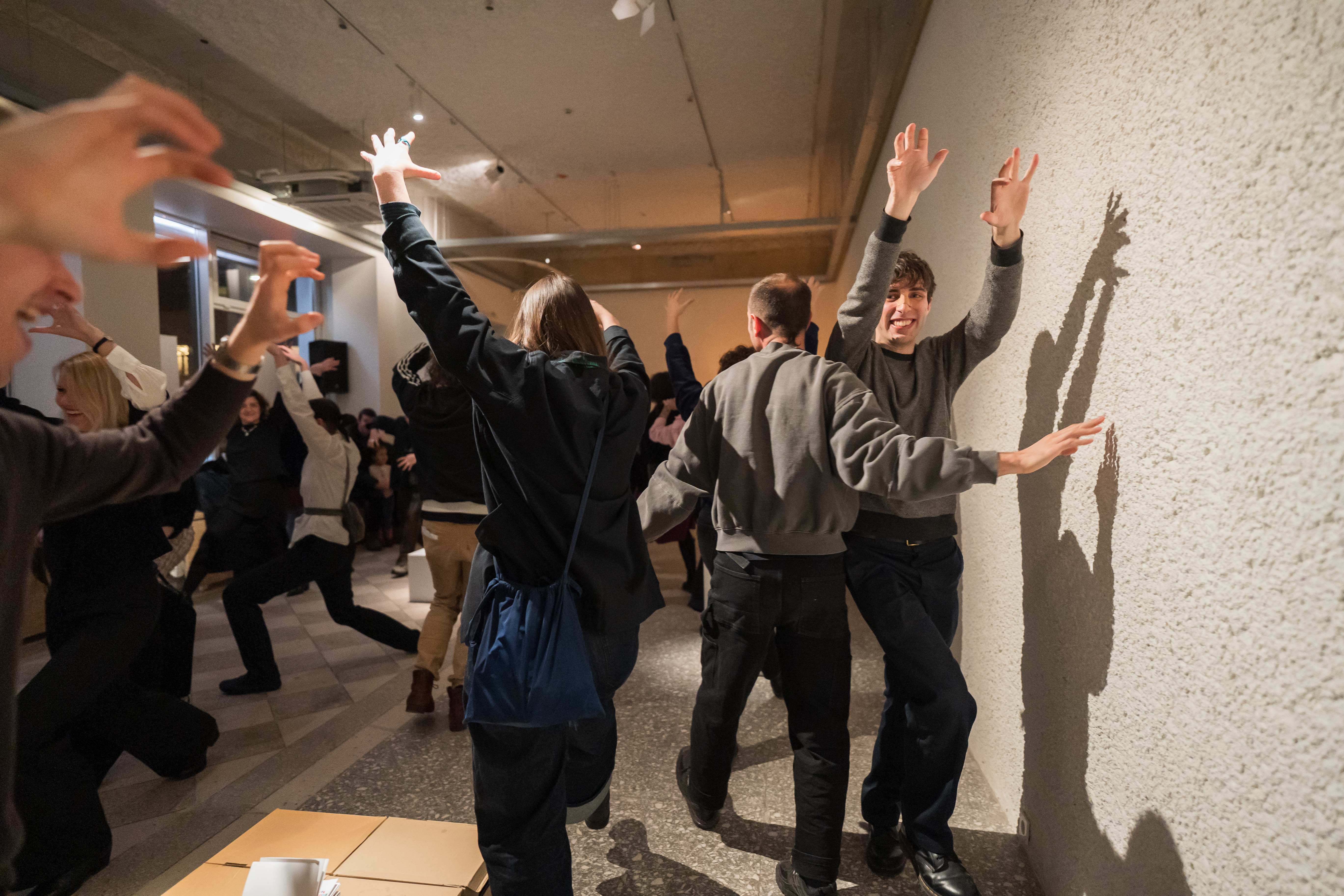
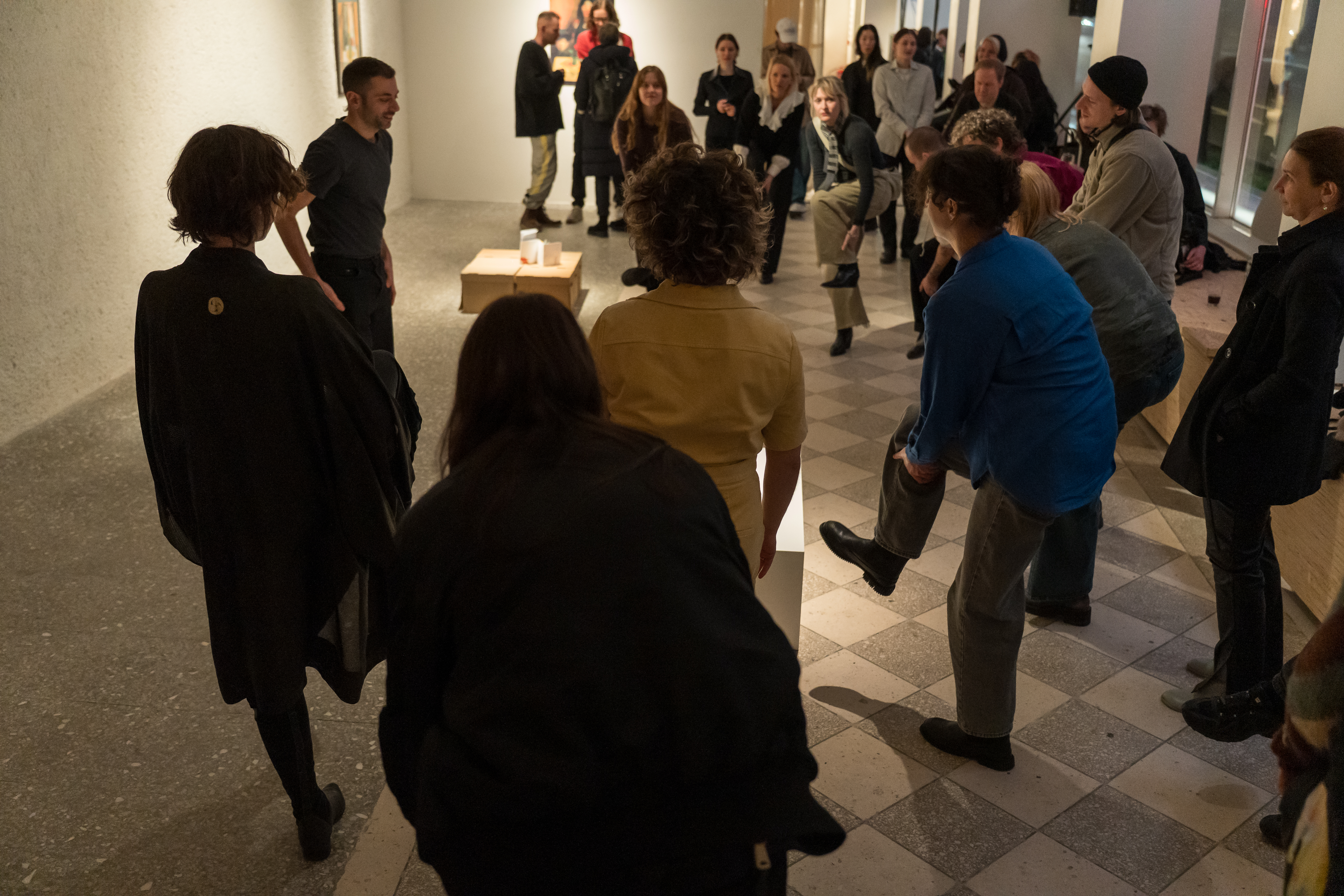
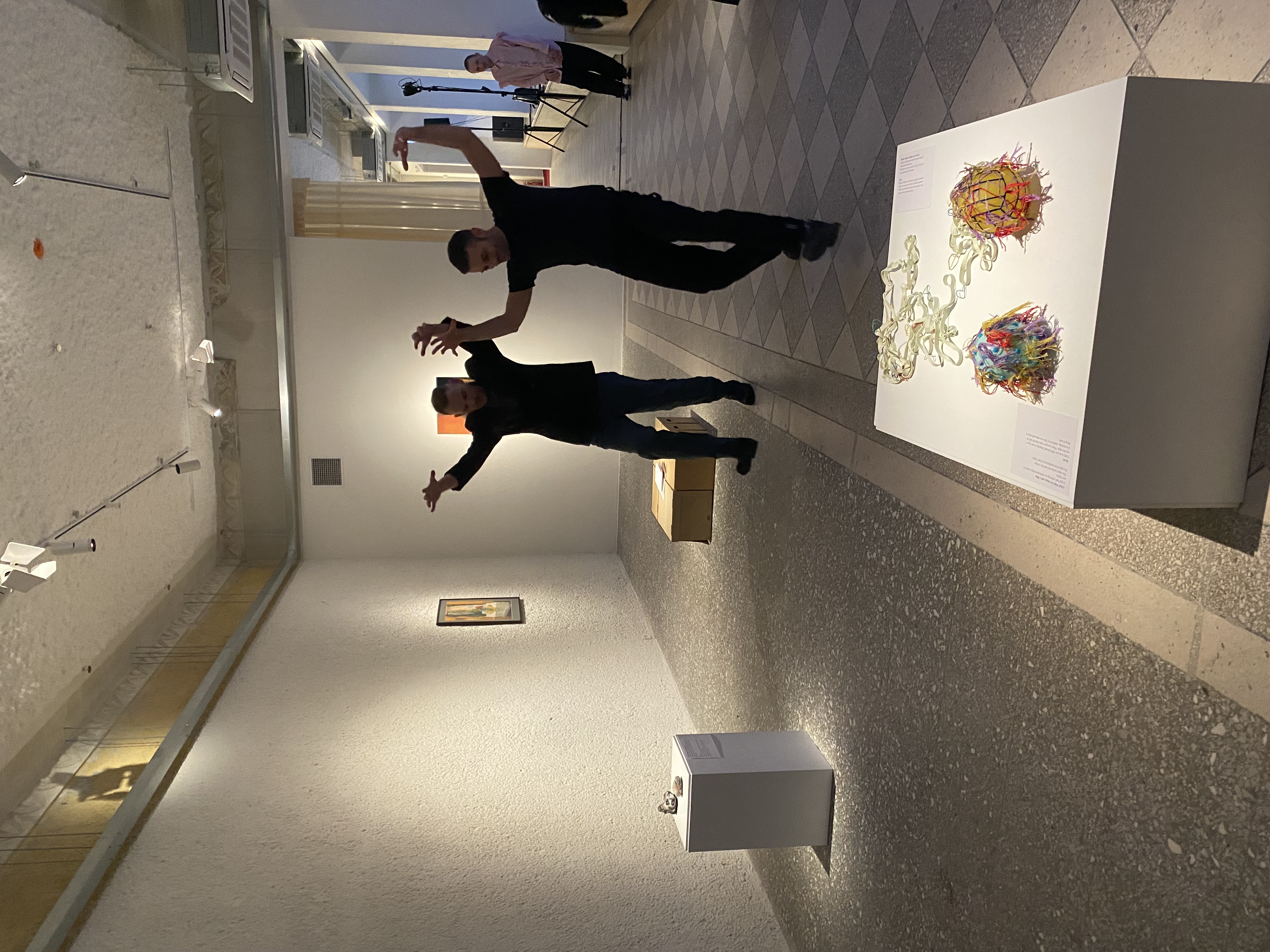
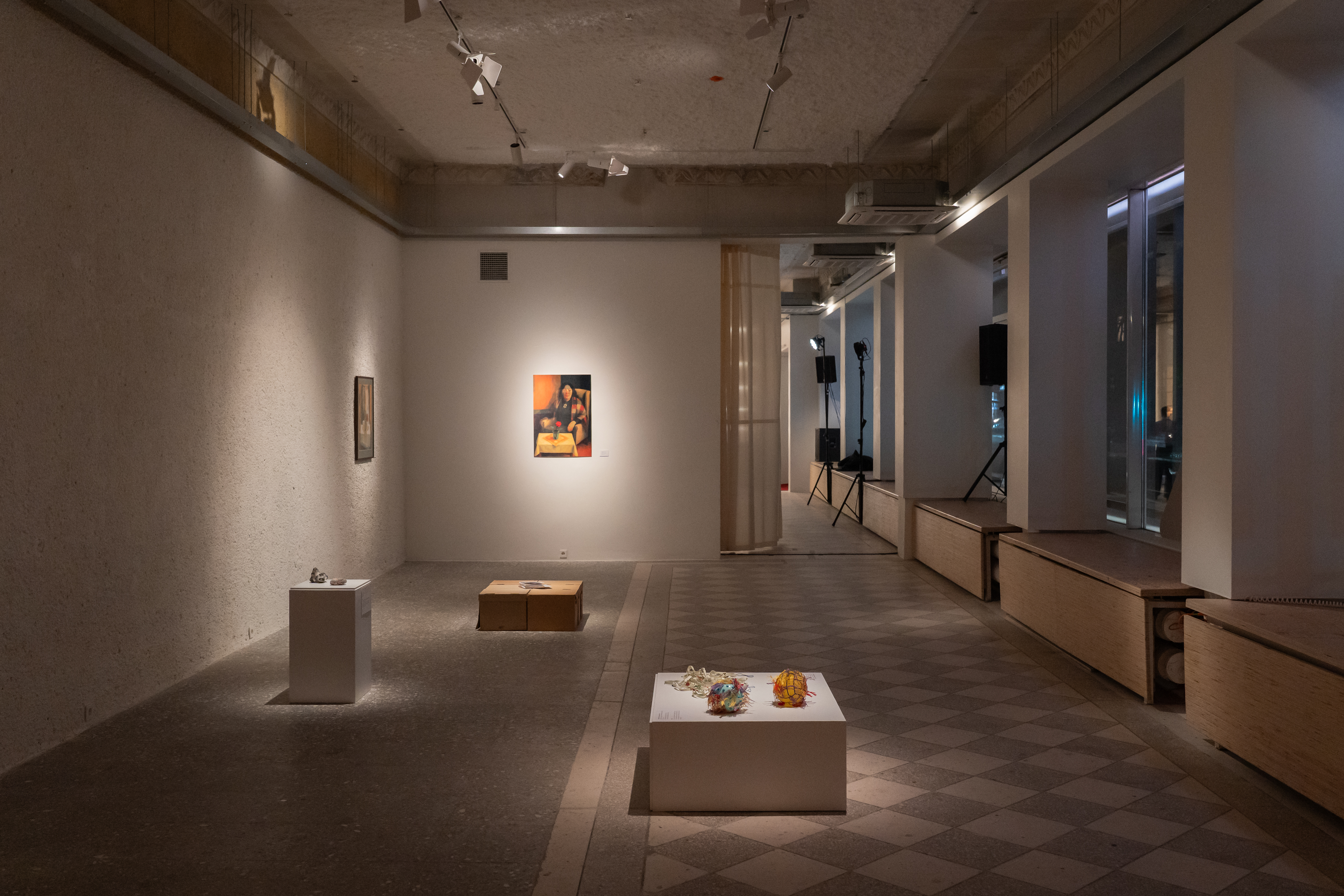
The AEP offered a space to try something unfamiliar, to test approaches to movement and participation that I had not yet attempted. What emerged was a clear sense that the installation succeeded most when it created a quiet permission for people to act differently. Children engaged most readily, but adults followed once they understood that the work welcomed a shift in behaviour. The objects functioned as gentle provocations and small cues that signalled it was acceptable to move, to play, to step outside expected conduct.
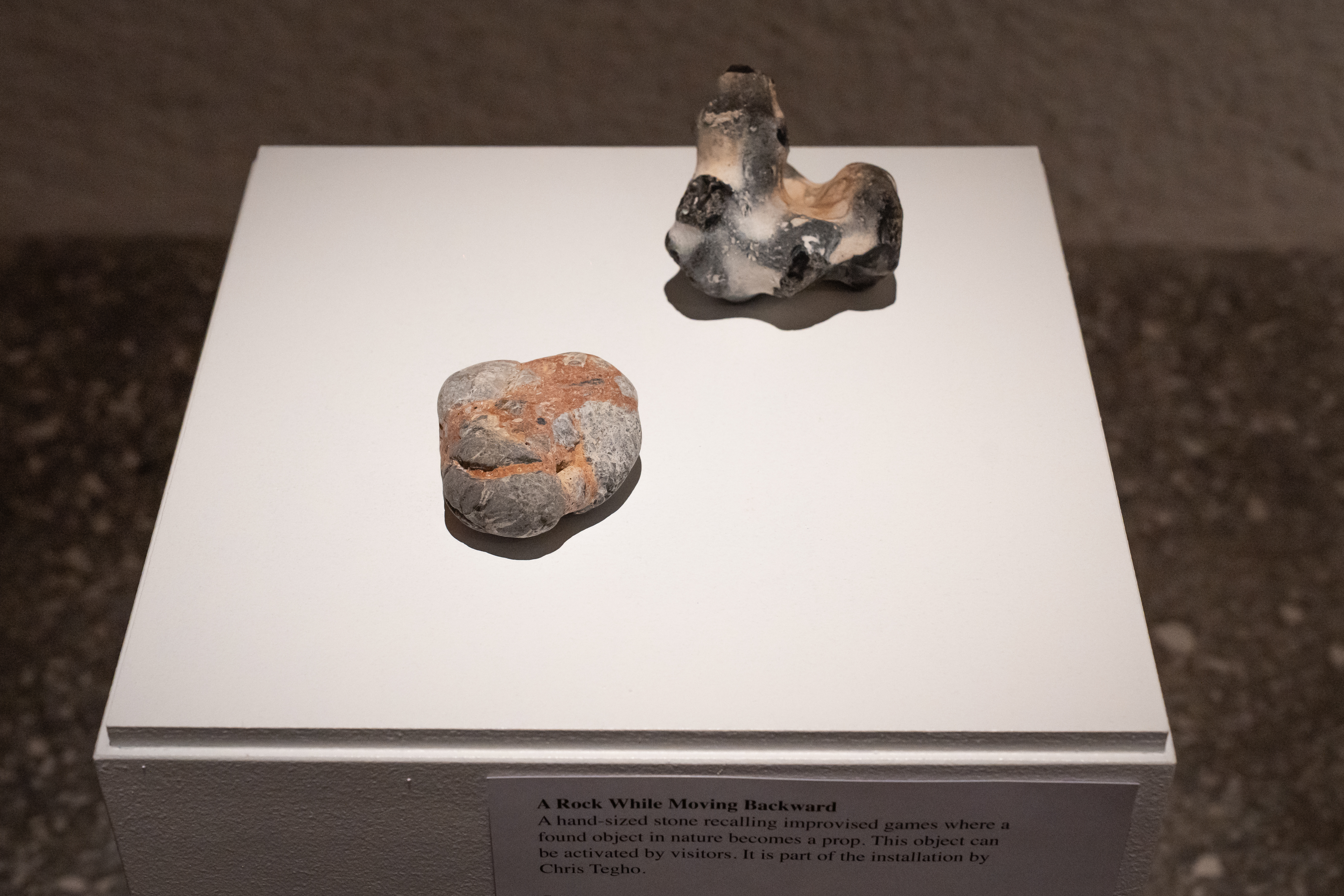
Interestingly, the stones drew the most engagement. Their everyday quality, and the fact that they weren’t fabricated by me, made them less intimidating. Their score felt accessible, and this simplicity encouraged curiosity. The more visibly “constructed” objects, despite their intention, carried a sense of artistic preciousness that made people hesitate at first. But after the public activation, this hesitation softened. Once participants experienced the objects in action, once they were shown that the installation invited looseness, irregularity, and experimentation, others began to approach with greater ease.
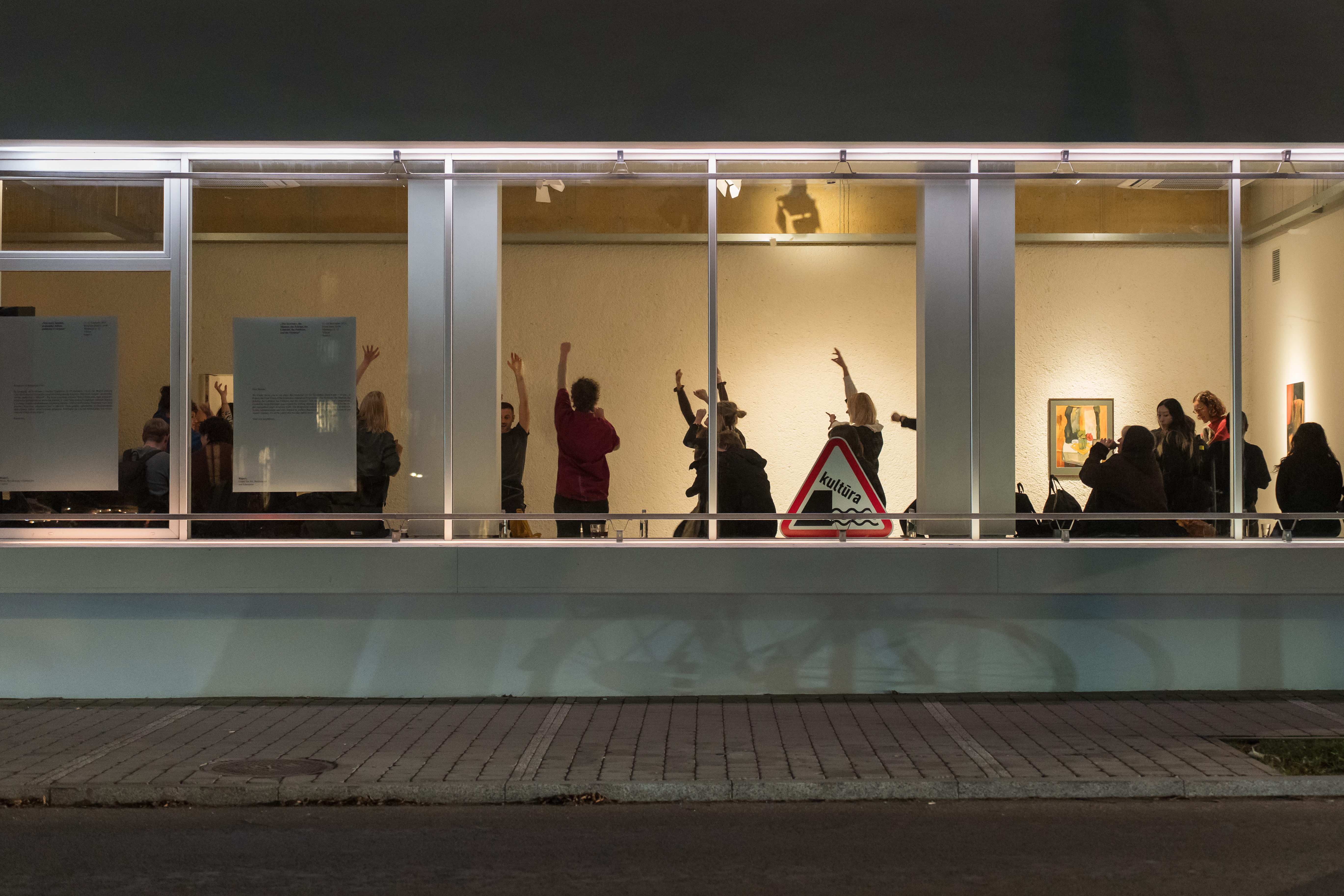
This affirmed something central to the project: people often need an invitation to step outside the norm. When that invitation is clear, and when the environment signals that unusual behaviour is permitted and welcomed, people respond. The installation became a way to open a small breach in everyday etiquette, allowing movement, awkwardness, and play to enter the gallery space without apology.
The work revealed that the threshold for play is not fixed, that it can be shifted through instructions, context, and the presence of others. When offered the chance, people are willing to play, to experiment, and to be a little strange. The installation showed that the desire for this shift is already there, that it simply needs to be named, held, and activated.